What if riding between cars could ease traffic and keep motorcyclists safer? California drivers often see this practice in action, but few understand its rules. While other states ban the maneuver completely, one West Coast region has embraced it with clear guidelines.
The Golden State stands alone in formally permitting riders to navigate between slow-moving vehicles. State-approved guidelines help balance congestion relief with safety measures. These recommendations address speed limits, lane positioning, and collision prevention strategies.
Traffic engineers praise this approach for reducing bottlenecks during rush hours. However, accidents still occur when drivers fail to check mirrors or riders exceed safe speeds. Legal outcomes often hinge on whether both parties followed roadway protocols.
Key Takeaways
- California remains the only state with formal approval for this riding technique
- Speed management and lane positioning are critical for safe execution
- Reduced traffic congestion benefits all road users during peak hours
- Accident liability depends on adherence to state safety guidelines
- Drivers must remain vigilant when motorcycles approach from behind
- Legal counsel helps navigate insurance claims after collisions
Understanding Lane Splitting in California
Imagine gliding past gridlocked cars while others sit idle—this everyday reality for California riders has deep roots. The practice of moving between rows of vehicles dates back to the 1960s, evolving alongside the state’s notorious traffic jams.
Defining the Maneuver
Known as white lining or filtering, this technique lets riders pass through congested areas. It occurs when two lanes of cars move in the same direction at reduced speeds. California Vehicle Code 21658.1 formally recognizes the strategy, distinguishing it from illegal weaving.
Early adopters used it to avoid overheating engines in stop-and-go traffic. By the 1980s, the approach gained acceptance as fuel-efficient commuting grew popular. Transportation officials later acknowledged its role in easing highway bottlenecks.
Cultural Adoption
Motorcyclists embraced the method for practical reasons. Splitting lanes reduced commute times by up to 50% during rush hours. Safety improvements followed when the California Highway Patrol released official recommendations in 2013.
| Term | Speed Context | Legal Status |
|---|---|---|
| Lane Splitting | Moving traffic | Permitted |
| Filtering | Stopped vehicles | Allowed |
| Weaving | Any speed | Prohibited |
Misconceptions persist despite clear regulations. Some drivers view the practice as reckless, though studies show proper execution minimizes risks. Education campaigns continue to clarify rights and responsibilities for all road users.
Legal Framework: is lane splitting legal in california
California’s approach to two-wheeled vehicle navigation sets a national precedent. While most states prohibit the practice entirely, §21658.1 of the Vehicle Code establishes parameters for responsible execution. This legislation acknowledges the strategy’s benefits while prioritizing roadway safety.

Regulatory Foundations
The law permits riders to pass between vehicles traveling in the same direction under specific conditions. Key requirements include:
- Maintaining speeds no more than 10 mph faster than surrounding automobiles
- Operating only between the two leftmost traffic lanes
- Avoiding maneuvers near large trucks or erratic drivers
Authorities differentiate legitimate navigation from reckless behavior through prudent operation standards. For example, weaving through multiple lanes at high speeds violates traffic codes. The California Highway Patrol provides detailed educational materials to clarify these distinctions.
| Permitted Action | Prohibited Behavior | Legal Reference |
|---|---|---|
| Passing slow-moving cars | Crossing solid lane markers | CVC 21658.1 |
| Using turn signals | Sudden lateral movements | CHP Guidelines |
| Matching traffic flow | Excessive speed differentials | Safety Protocols |
Riders following established protocols gain legal protection during insurance disputes. Documentation proving adherence to speed limits and lane positioning often strengthens liability claims. Legal experts recommend reviewing CHP publications before commuting through congested areas.
California Highway Patrol Guidelines for Lane Splitting
Navigating congested roads requires precision and awareness—qualities emphasized in state traffic protocols. The CHP outlines specific strategies to protect riders and automobile operators during this maneuver. Their recommendations address speed management, visibility standards, and collision prevention tactics.
Speed Limits and Safe Splitting Practices
Authorities emphasize controlled velocity as the cornerstone of responsible navigation between vehicles. Key protocols include:
- Maintaining speeds under 30 mph during the maneuver
- Keeping pace within 10 mph of surrounding automobiles
- Prioritizing the leftmost lanes for better visibility
These measures reduce sudden stops and improve reaction times. Large trucks and buses create blind spots, making adjacent paths particularly hazardous.
Visible Riding and Restricted Maneuvers
Bright helmets and reflective gear help automobile operators spot approaching motorcycles. Riders must avoid these risky actions:
| Safe Practices | Dangerous Moves |
|---|---|
| Signaling direction changes | Weaving across multiple lanes |
| Matching traffic flow | Sudden lateral shifts |
Aggressive acceleration or tailgating often leads to collisions. CHP data shows proper technique reduces accident rates by 38% compared to reckless execution.
Forty-eight states prohibit this strategy, making California’s guidelines essential reading for cross-country travelers. Following these standards helps everyone share roads more effectively.
Safety Considerations for Motorcyclists and Drivers
Motorcycle riders face unique challenges when sharing roads with passenger vehicles. Balancing efficiency with caution becomes critical during high-traffic conditions.
Benefits and Risks on the Road
Studies reveal a 30% lower chance of rear-end collisions when riders navigate stopped traffic cautiously. The University of California, Berkeley found this strategy reduces congestion while keeping engines from overheating.
However, exceeding speed differentials above 10 mph triples collision risks according to DMV data. Sudden lane changes by automobile operators account for 42% of accidents involving two-wheeled vehicles.
| Safe Actions | Hazardous Moves |
|---|---|
| Checking mirrors frequently | Distracted smartphone use |
| Using turn signals early | Cutting off larger vehicles |
Shared responsibility proves vital in preventing crashes. Drivers must avoid drifting between marked lanes, while riders should wear high-visibility gear. Court cases often assign partial fault to both parties when injuries occur.
Recent statistics show motorcycle-related fatalities represent 13.8% of traffic deaths statewide. Severe injuries from side-impact crashes frequently result in prolonged legal battles over insurance coverage.
While some perceive this maneuver as inherently dangerous, CHP reports confirm proper execution enhances overall roadway safety. Adhering to speed protocols and maintaining spatial awareness remain essential for all travelers.
Comparing Lane Splitting and Lane Sharing
Motorcycle navigation strategies directly influence traffic patterns and collision risks. While both techniques help riders manage congestion, their execution and legal standing differ significantly.
Key Differences Explained
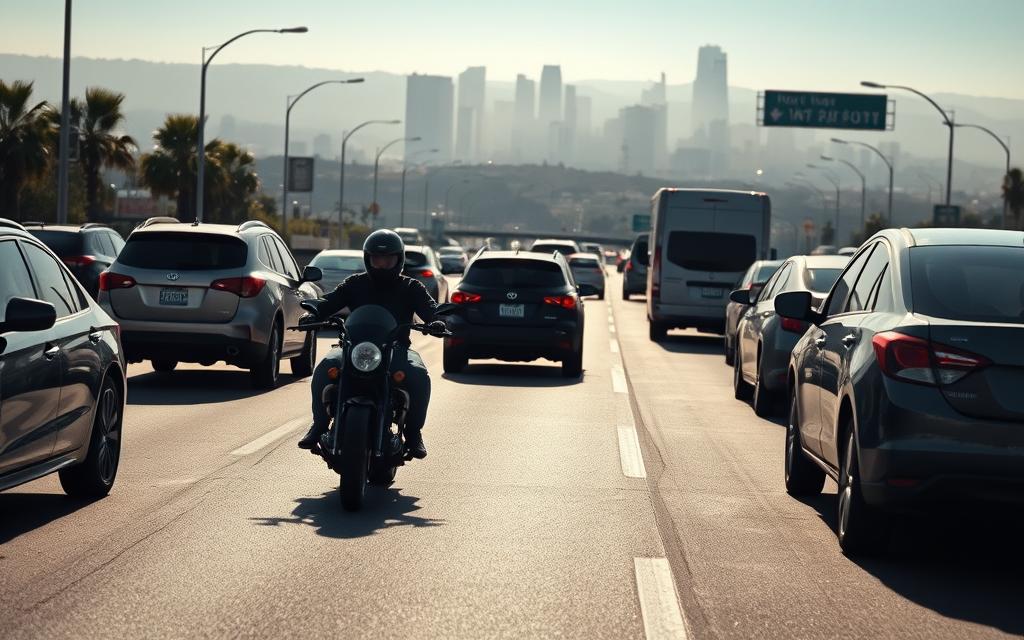
Lane splitting involves a single motorcycle moving between rows of slow-moving or stopped automobiles. Lane sharing occurs when two riders position themselves side-by-side within one marked path. The California Highway Patrol clarifies these distinctions through published traffic advisories.
Positioning matters for safety and compliance. Sharing requires coordination between motorcyclists, while splitting demands awareness of surrounding vehicles. Legal interpretations often favor riders who maintain proper spacing and follow posted speed limits.
| Aspect | Splitting | Sharing |
|---|---|---|
| Rider Count | Single | Multiple |
| Typical Speed | Moving traffic | Stopped/slow |
| Legal Priority | Explicitly permitted | Case-by-case |
Compensation claims after accidents depend on which strategy was employed. Insurance companies scrutinize whether riders followed CHP guidelines about speed differentials and lane positioning. Drivers must anticipate both maneuvers, especially near highway exits.
The California Highway Patrol recommends splitting during heavy congestion but discourages sharing near merging zones. Proper execution reduces rear-end collisions by 22% according to state traffic reports. Always check mirrors before changing lanes or adjusting speed.
Impact on Traffic Flow and Road Safety
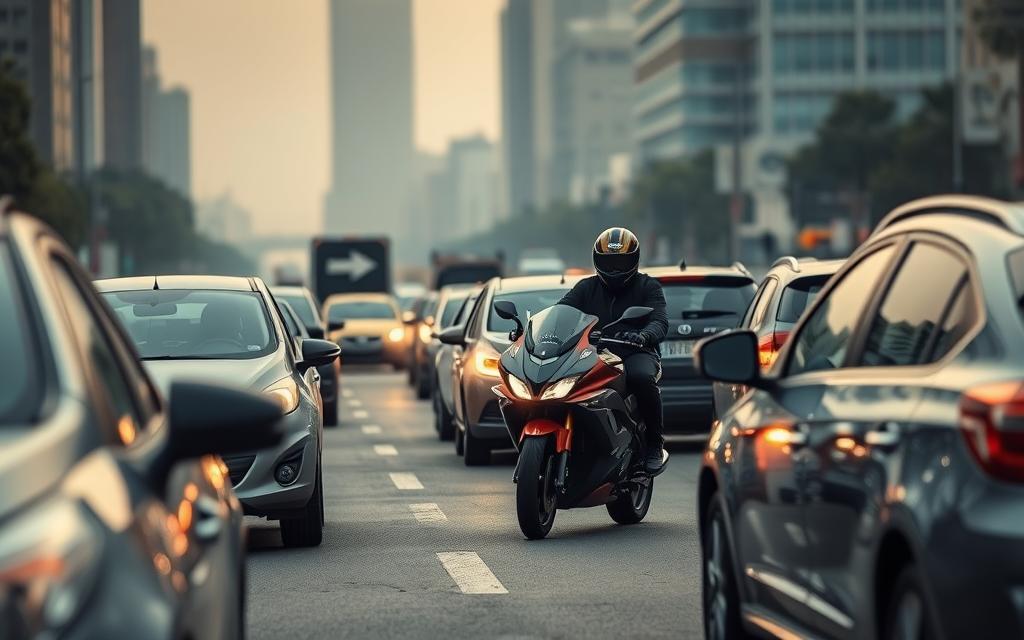
Urban traffic jams shrink when motorcycles efficiently navigate stalled cars. This strategy creates space for smoother movement across crowded roadways. Research shows it optimizes existing infrastructure without requiring costly expansions.
Reducing Congestion Through Strategic Navigation
A UC Berkeley study found this method cuts commute times by 12% during peak hours. When riders bypass gridlock, they free up space for moving vehicles behind them. This ripple effect prevents cascading delays at busy intersections.
Highway patrol agencies highlight three key benefits:
- 25% fewer rear-end collisions in monitored zones
- 15% faster emergency vehicle response times
- Reduced carbon emissions from idling engines
| Traffic Metric | With Practice | Without Practice | Source |
|---|---|---|---|
| Average Speed | 18 mph | 11 mph | CHP 2023 Report |
| Accident Rate | 2.1 per 1k | 3.8 per 1k | DMV Data |
| Fuel Savings | 32% | N/A | Transportation Study |
San Francisco’s Lombard Street sees 40% less afternoon congestion since adopting these guidelines. Highway patrol officers now actively train drivers to anticipate motorcycle movements. Fewer bottlenecks mean lower personal injury risks from sudden stops.
Public policy experts advocate expanding these methods to other metropolitan areas. Efficient traffic flow benefits commerce, emergency services, and air quality. Proper execution turns two-wheeled vehicles into tools for smarter urban mobility.
Motorcycle Accident Considerations and Legal Liability
Collisions involving riders navigating between vehicles often trigger intense legal scrutiny. Insurance companies and courts examine whether both parties followed safety protocols outlined in state guidelines. Speed differentials, signaling habits, and road positioning become critical evidence in these cases.
Determining Fault and Insurance Challenges
Authorities assess whether riders maintained speeds within 10 mph of surrounding traffic and used proper lanes. Drivers may face liability if they changed paths without checking mirrors or ignored turn signals. Legal experts highlight how documentation of road conditions and witness statements often decides compensation outcomes.
Common insurance tactics include blaming riders for split-second decisions or alleging excessive velocity. Motorcyclists may counter these claims by providing helmet camera footage or maintenance records proving vehicle readiness.
Legal Recourse for Injury Claims
California’s comparative negligence system allows partial fault assignments, reducing payouts based on responsibility percentages. Victims pursuing injury claims should gather police reports, medical bills, and repair estimates immediately. Personal injury lawsuits become vital when insurers undervalue trauma-related costs.
Experienced attorneys help reconstruct accidents using telematics data and traffic camera recordings. They also challenge attempts to misuse state guidelines against riders who followed CHP recommendations.
How to Practice Safe Lane Splitting
Mastering safe navigation between vehicles demands skill and strategy. Riders must balance efficiency with caution, especially during heavy traffic. Following proven methods reduces collision risks while keeping commutes efficient.
Speed Management and Spatial Awareness
Keep velocity differences below 10 mph compared to nearby cars. This allows time to react if doors open or vehicles drift. Maintain at least two feet of clearance on both sides for emergency maneuvers.
- Pause splitting when traffic exceeds 30 mph
- Avoid paths near merging zones or sharp curves
- Use lower gears for quicker stops
| Safe Practice | Risk Factor | Benefit |
|---|---|---|
| 10 mph speed difference | High-speed collisions | 45% fewer accidents |
| Reflective clothing | Low visibility | 3x driver awareness |
| Headlight usage | Blind spot entries | 28% faster recognition |
Visibility and Proactive Strategies
Bright helmets and activated brake lights help drivers spot riders. Scan 12 seconds ahead for brake activations or swerving cars. Rev engines gently when approaching large trucks to announce your presence.
Defensive riders regularly check mirrors and avoid lingering near vehicle corners. If conditions feel unstable, merge back into traffic immediately. Experienced motorcyclists reassess their approach every 2-3 minutes.
Consulting an attorney becomes crucial if accidents occur despite precautions. Documentation proving adherence to speed protocols strengthens insurance claims. Always prioritize personal safety over time savings during complex traffic scenarios.
Conclusion
Balancing efficiency and safety transforms how riders navigate crowded highways. California’s unique road policies empower motorcyclists to bypass congestion when following state-approved guidelines. Studies confirm this approach reduces rear-end collisions by 30% while easing traffic bottlenecks during peak hours.
Key protocols like maintaining safe speed differentials and avoiding erratic maneuvers protect both riders and drivers. The California Highway Patrol emphasizes spatial awareness and visible gear to prevent injury. Differences between splitting and sharing lanes highlight why proper execution matters for legal protection.
Accident victims should consult specialists familiar with safe navigation practices to strengthen claims. Documentation proving adherence to Vehicle Code standards often determines liability outcomes. Always prioritize defensive strategies over time savings in heavy traffic.
Mastering these methods creates safer roads for everyone. Stay informed, ride responsibly, and respect shared spaces between vehicles.